
In recent years, a subtle but powerful shift has been reshaping the furniture market: outdoor furniture is moving indoors. What was once designed exclusively for terraces, patios, and gardens is now finding its way into living rooms, kitchens, and even office spaces. For B2B professionals in the furniture, design, and hospitality industries, this is not just a stylistic curiosity — it represents a strategic opportunity.
Why Outdoor Furniture Is Coming Inside
Aesthetic Evolution: From Rustic to Refined
Brands such as Skyline Design, Vincent Sheppard, and Maiori have elevated outdoor furniture design to premium standards. Clean lines, woven rope details, powder-coated aluminium frames, and sustainably sourced teak now align perfectly with contemporary interior aesthetics.
As outdoor collections become more sophisticated, they naturally blend with minimalist, Scandinavian, Mediterranean, and even industrial interior styles. For designers and retailers, this convergence opens new merchandising possibilities: outdoor pieces no longer need to be confined to seasonal displays.
Performance Meets Everyday Living
Outdoor furniture is engineered for durability. UV resistance, moisture protection, stain-resistant fabrics, and corrosion-proof materials were originally developed to withstand harsh climates. Indoors, these features translate into:
- Longer product lifecycles
- Reduced maintenance
- Greater resistance to spills and daily wear
- Ideal solutions for high-traffic environments
This makes outdoor furniture particularly relevant for hospitality, co-living spaces, family homes, and even office lounges.
Post-Pandemic Lifestyle Shifts
The pandemic accelerated the blending of indoor and outdoor living. Consumers invested heavily in their terraces and gardens, developing emotional attachment to outdoor comfort. As hybrid lifestyles continue, customers increasingly seek continuity between exterior and interior spaces.
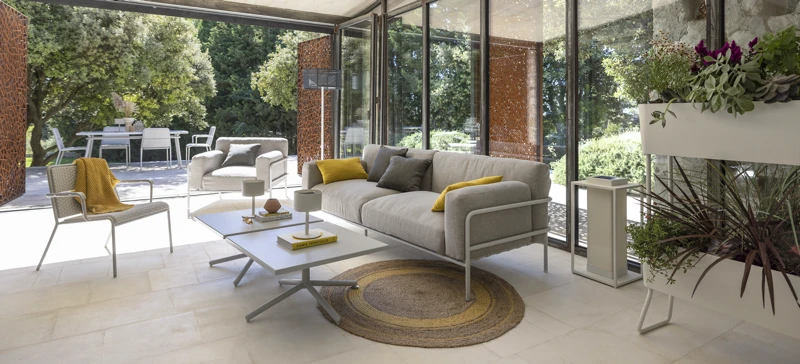
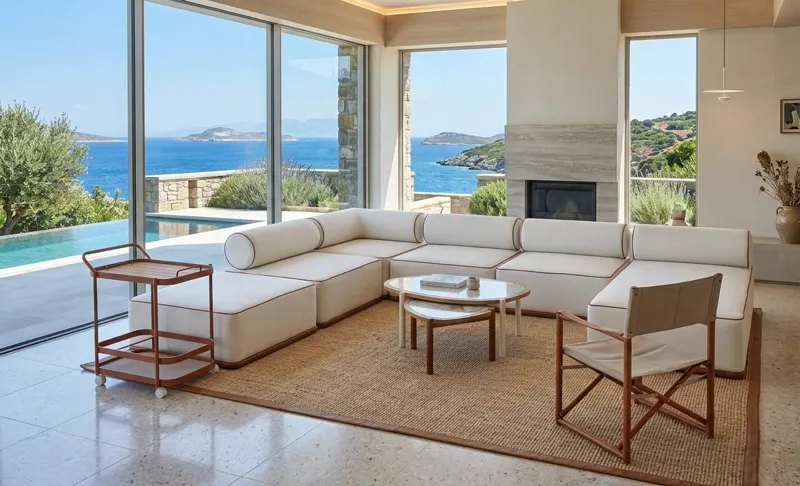
The “inside-out” concept — visually and functionally connecting home environments — supports this shift. Outdoor sofas, lounge chairs, and dining sets help create a seamless flow between patio and living room.
Key Opportunities for B2B Professionals
Retailers: Rethink Visual Merchandising
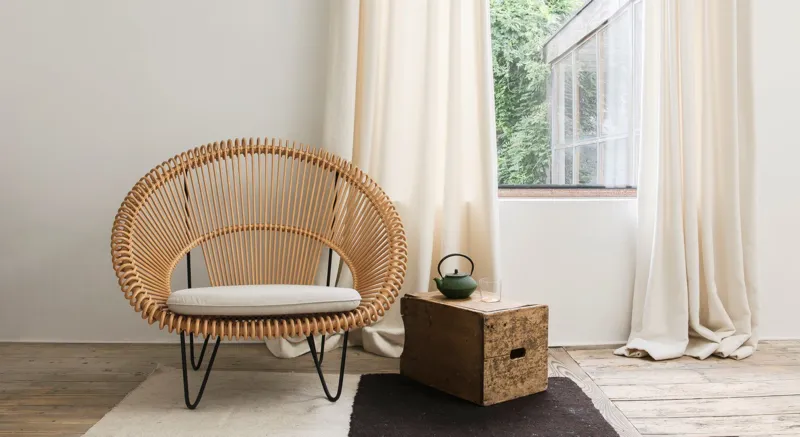
Instead of separating indoor and outdoor collections, consider mixed staging. Showcase a teak outdoor armchair in a living room display or present rope dining chairs around an indoor table.
Clear storytelling is essential:
* Highlight durability as a premium feature.
* Emphasise versatility (indoor/outdoor dual use).
* Train sales teams to explain material advantages in indoor contexts.
Interior Designers: Leverage Functional Aesthetics
Outdoor furniture offers designers a new toolkit for projects requiring robustness without compromising style. It is particularly suited for:
- Hospitality (boutique hotels, rooftop bars, restaurants)
- Healthcare and senior living
- Coastal properties
- Family-oriented residential projects
Recommend high-performance textiles and natural finishes to balance comfort and sophistication.
Manufacturers & Brands: Adapt Communication
Brands should avoid marketing outdoor products solely as seasonal items. Instead:
- Reframe collections as “all-space furniture.”
- Develop campaigns featuring indoor placements.
- Provide specification sheets emphasizing performance benefits for commercial interiors.
- Offer customizable cushions and fabrics suitable for both environments.
Sustainability as a Competitive Advantage
Many outdoor brands already prioritise sustainable materials due to environmental exposure requirements. FSC-certified teak, recyclable aluminium, and long-life textiles align with increasing ESG demands in B2B procurement.
Positioning durable, multi-use furniture as a long-term investment strengthens value propositions for architects and property developers.
Strategic Recommendations
To capitalise on this trend, professionals should:
- Audit current product lines for dual-use potential.
- Update showroom layouts to reflect hybrid living concepts.
- Train sales teams on material performance storytelling.
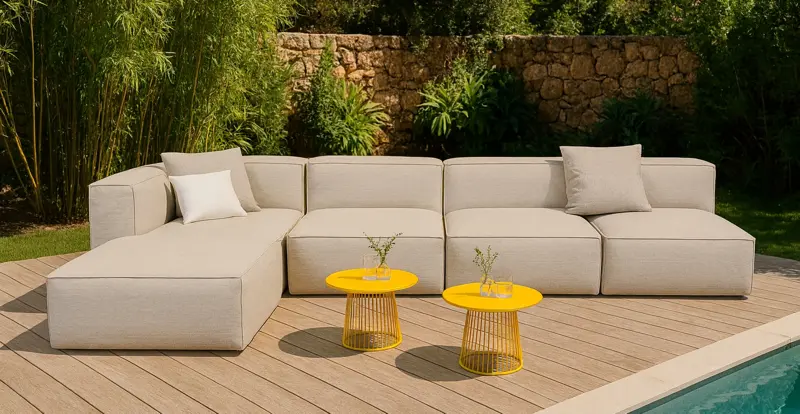
- Integrate indoor photography into outdoor product catalogues.
- Collaborate with architects and hospitality groups on pilot projects.
The migration of outdoor furniture indoors is not a passing trend. It reflects broader shifts toward durability, flexibility, and fluid living spaces. For B2B stakeholders who act early, it represents a meaningful opportunity to differentiate, increase margins, and respond to evolving client expectations.
In conclusion
Ultimately, the integration of outdoor furniture into interior spaces signals a structural evolution rather than a short-term design trend. As boundaries between indoor and outdoor living continue to blur, professionals who reposition outdoor collections as versatile, high-performance solutions will gain a competitive edge. By combining aesthetic sophistication with durability, sustainability, and multi-environment functionality, brands, retailers, and designers can respond to new client expectations while unlocking additional revenue streams. The future of furniture is no longer defined by location — but by adaptability.